Combining Solar Generation with Workplace EV Charging
Workplace charging and rooftop solar are often developed by different teams, even though their operating hours can overlap. Planning them together can increase onsite use of solar generation and reduce avoidable charging peaks. The result depends on load data and control strategy, not simply on placing chargers beside a photovoltaic system.
Compare the two daily profiles
Collect at least several weeks of building interval data, solar production, vehicle arrival times, departure times, and expected energy per vehicle. Solar output usually rises after employees arrive and declines before the last vehicles leave. That overlap creates flexibility: many cars do not need to charge at full power immediately after connection.
Separate required energy from desired charger power. A vehicle that remains parked for eight hours may receive its daily energy at a lower average rate than the charger's maximum. This allows the control system to shift charging toward midday solar production while still meeting departure targets. Keep a minimum service level so drivers with short stays or urgent trips are not disadvantaged.
Use control rather than coincidence
A solar-compatible charging plan needs a measurement point and a control rule. The controller may monitor the grid connection, building load, solar output, and active charging sessions. It can then distribute available current according to departure time, user priority, or equal sharing. If communications fail, the design should fall back to a safe current limit rather than rely on a cloud connection to prevent overload.
Time-of-use tariffs add another variable. Charging may be economical during low-price grid periods even when solar is unavailable. The operating policy should state whether the objective is maximum solar self-consumption, minimum energy cost, a grid import limit, or a combination. These goals can lead to different schedules.
Decide whether storage is justified
Battery storage can move solar energy into evening charging hours and reduce short demand peaks, but it adds conversion losses, controls, maintenance, and capital cost. Model it only after testing what managed charging can achieve on its own. Storage is more likely to help when charging demand remains high after solar production falls, the grid connection is constrained, or demand charges are material.
The storage controller and charging platform must exchange reliable data or follow a common site-level energy management system. Define which system has authority over the grid limit and how priorities change during an outage, low battery state of charge, or communications loss.
Select equipment for the control plan
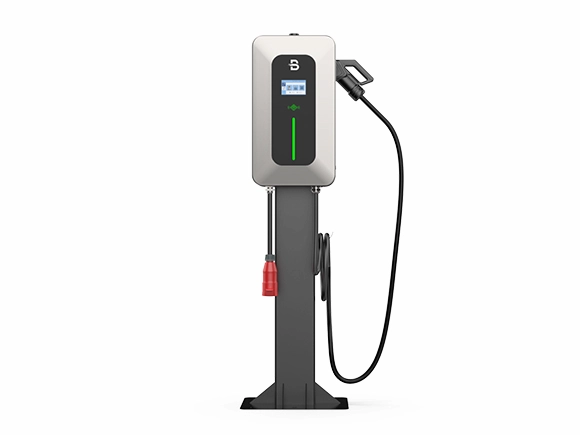
Networked chargers should expose the measurements and control functions needed by the site. Confirm the adjustable current range, response behavior, communications method, meter accuracy, local fallback, and compatibility with the chosen backend. Teams reviewing BENY EV chargers can compare AC units with dynamic load-balancing and solar-oriented functions against the site's parking duration, connector, power, and communications requirements.
Commissioning should test more than a successful charging session. Vary the building load, reduce solar output, disconnect communications, connect several vehicles, and verify that the grid limit remains protected. Review the data after several weeks of real use, then adjust priorities and limits based on observed behavior.